Spoly: Sports Card Scanner
- 4.8
- Rating
- 10.00K
- Installs
- Free
- Price

 Analysis by App-foxy
Spoly: Sports Card Scanner is the kind of lifestyle app that makes sense the moment you have a box of cards and no clear idea where to begin. I used it as a practical companion for identifying sports cards, checking their value, and keeping a collection more organized, rather than treating it as a simple novelty scanner. My overall view is positive: it brings several jobs into one place and can make casual collecting feel much less chaotic. The important qualification is that it works best as a first-pass tool and collection aid, not as the final authority on what a card is worth.
The app is free to install, carries an Everyone age rating, and comes from Scaling Engine Limited. Its store presence is still relatively compact, with over ten thousand installs, but the response from users is encouraging: it holds a 4.8 average from around one thousand ratings, alongside dozens of written reviews. That combination suggests a focused product that has found a receptive audience, although I would still approach every valuation with the same care I would use with any digital estimate.
What Spoly does well in everyday collecting
The clearest strength is the way the app connects identification, valuation, and collection management. Normally, I would handle those tasks separately: search for a card using a browser, compare listings manually, then write down what I own in a spreadsheet or notes app. That process is slow and easy to abandon halfway through a box. Spoly gives the workflow a single home, which is valuable even before considering any individual scanning result.
You May Also Like

 AccuWeather: Weather Radar
AccuWeather Review: A Quick, Clear Forecast for Everyday Decisions
For everyday plans, the best forecast is the one you can understand quickly. AccuWeather makes rain timing, radar, and local conditions easy to act on, with a few trade-offs.

 Hill Climb Racing
Why Hill Climb Racing Still Turns Crashes Into One More Run
A tiny car, a bumpy hill and one more upgrade: Hill Climb Racing keeps resurfacing because its simple chaos makes every near-miss feel personal.

 AliExpress - Shopping App
AliExpress Makes Global Shopping Feel Personal, but Shoppers Bear the Risk
AliExpress turns a global marketplace into a pocket-sized discovery engine. Its reach is useful, its shopping loop compelling, and its trade-offs easy to miss.

 Lords Mobile: Kingdom Wars
Lords Mobile Is a Kingdom-Building Routine, Not a Quick Match
A case-by-case verdict on the building, battles, device demands, and social commitments that make Lords Mobile rewarding for some players and exhausting for others.

 PDF Scanner app - TapScanner
TapScanner Makes Paperwork Easier to Capture, Check, and Share
TapScanner makes scanning with a phone feel less like a rescue operation and more like a dependable step in getting work done. Its capture tools are useful, though not flawless.

 Block Blast!
 Shows How Much a Puzzle Game Can Leave Out
A quiet grid game shows why puzzle players increasingly value instant clarity, repeatable skill and low-pressure play—and where the genre still needs to catch up.
More From Our News Desk
View All News


For a new collector, the biggest benefit is reducing the uncertainty at the start. A card may have a familiar player, a recognizable team, and a season printed somewhere on the design, yet small differences can matter. Set details, variations, parallels, and condition all complicate a quick search. Having an identifier to begin with is more useful than guessing from a photo or typing a vague description into a search engine.
I also like the distinction between finding a card and managing it afterward. Identification is a momentary task; collection management is an ongoing habit. Once a card has been recognized, the real value of an app like this is whether it helps me remember what I have, review it later, and make better decisions about duplicates or cards I might want to sell. That makes Spoly more practical than a scanner that only returns a name and then leaves the user to do everything else.
The strongest reason to try Spoly is the connected workflow, not the scanning gimmick alone. If I am sorting a mixed pile after buying cards, receiving a family collection, or preparing items for a trade, moving from recognition to valuation and then into an organized record saves attention. The convenience becomes more noticeable over a large group of cards, where repeated browser searches quickly become tiring.
A useful workflow for a mixed box
My preferred approach is to work in small batches instead of scanning an entire collection in one rushed session. I would separate cards by sport or broad era first, then use the identifier on cards that are unclear. After that, I would review the valuation rather than accepting it immediately, and finally place the card into the collection record with enough personal context to make the entry useful later.
That last step is easy to underestimate. A collection record should answer more than “Do I own this?” I would use it to distinguish cards kept for personal interest from cards being considered for sale, trade, grading, or replacement. Even without turning the app into a formal accounting system, that habit makes future sorting much easier. It also prevents the common problem of finding a second copy and not remembering whether the first one was stored elsewhere.
A particularly helpful tactic is to treat the first scan as an inventory checkpoint. If the app identifies a card that appears valuable, I would not immediately move it into a sale pile. I would inspect the physical card, compare its condition with the assumptions behind the estimate, and record where it is stored. This creates a more reliable personal history than relying on memory or a loose stack of cards on a desk.
Why valuation needs a collector’s judgement
Valuation is useful because it gives a starting point, but sports cards are not ordinary fixed-price products. The condition of the card, demand for a player, scarcity, exact version, timing, and the difference between an asking price and an actual sale can all change the result. An app can help me locate a likely range or reference point, but it cannot remove those variables from the hobby.
That is why I would use Spoly to prioritize attention. If a scan points to a card that looks more significant than the rest of a pile, I can spend extra time verifying the edition and examining the surface, corners, centering, and edges. For ordinary cards, the estimate may be enough to decide whether they belong in a personal collection. For a potentially important card, it should be the beginning of research, not the conclusion.
This is also where the app compares favorably with a basic notes app but less decisively with specialist marketplaces or detailed collector databases. Notes are flexible but require manual effort. Marketplaces show active demand and listing context, but they can be noisy and often mix different conditions or versions. A dedicated card tool is more convenient for an initial pass, while a serious seller may still prefer direct market checking before setting a price.
Collection management that rewards consistency
The management side becomes more valuable when I use it regularly. A single weekend of scanning can create a helpful overview, but a collection changes as cards are bought, traded, sold, or given away. The practical question is not whether the app can make one impressive inventory; it is whether I can keep the inventory current without turning the hobby into paperwork.
I would recommend establishing a simple routine: scan newly acquired cards soon after bringing them home, check uncertain identifications before storing them, and update the record whenever a card leaves the collection. This is especially useful for collectors who have several storage boxes and often forget where a particular player or set was placed. The app’s value grows through repeated use, not through one large setup session.
There is a subtle trade-off here. Digital organization creates clarity, but it also creates a maintenance obligation. If I stop updating the collection, the record can become less trustworthy than a smaller handwritten list that reflects reality. Spoly is therefore best for someone willing to build a lightweight habit. It is not a magic solution for an unstructured collection unless the owner continues to maintain it.
Where the experience needs caution
The main weakness is the natural gap between automated convenience and collector-grade certainty. A scan may make identification faster, but the user still has to recognize when a result deserves closer inspection. Cards with similar designs, subtle variations, unusual condition, or incomplete visual information can require manual verification. Anyone expecting a camera-based shortcut to settle every detail will probably be disappointed.
I would also be careful with the meaning of an estimated value. A figure can be useful for sorting, but it should not be mistaken for guaranteed cash in hand. Selling a card involves finding a buyer, presenting it accurately, choosing a marketplace, handling condition questions, and accepting that demand changes. Spoly can help me decide which cards deserve more research, yet it cannot replace the human part of a transaction.
The free entry point is welcome, but the presence of in-app purchases priced at $29.99 to $39.99 per item means users should think about their intended level of use before committing to paid functionality. For someone checking a handful of inherited cards, the free experience may be enough to judge whether the workflow fits. A collector planning a large inventory should first understand exactly which tools require payment and whether those tools match the scale of the collection.
That pricing structure is not automatically a flaw, but it changes the recommendation. I would not install the app assuming every collection-management need will remain free. I would explore the basic workflow first, then decide whether the paid items offer enough value for my own volume and goals. The right question is not simply whether the app costs nothing to download; it is whether the full workflow is economical for the way I collect.
Another point worth considering is platform compatibility. The app requires Android 8.0 or later, so anyone using an older Android device should check compatibility before planning a scanning session. On a supported phone, I would also make sure the camera area is clean, use even lighting, and place one card clearly in view. Those simple steps are not glamorous, but they reduce avoidable recognition problems and make the results easier to judge.
A realistic use case: sorting cards after a family move
Imagine finding several boxes of cards while clearing a relative’s home. The cards are mixed, the original owner remembers only a few names, and there is no reliable inventory. This is where I think Spoly has a particularly sensible role. I would create a temporary sorting area, group cards broadly, scan the uncertain ones, and use the valuation results to identify which cards deserve careful inspection.
I would not try to sell everything immediately. First, I would record the cards that appear worth further attention, keep them separate from the bulk cards, and photograph or inspect them carefully. The rest could still be organized for sentimental reasons or stored by sport and set. This approach avoids two common mistakes: spending hours researching cards with little practical value, and accidentally overlooking an important variation because it was buried in a random pile.
For a trader preparing for a local meetup, the workflow is slightly different. I would use the app before the event to review duplicates and identify cards I am comfortable offering. Then I would verify the most important cards independently, because a trade depends on both sides agreeing about the exact item and its condition. Spoly helps me arrive prepared; it does not remove the need for clear communication with another collector.
Who will get the most from it?
Spoly is a strong fit for beginners who feel overwhelmed by the vocabulary and detail of sports cards. It gives them a structured way to start without requiring a spreadsheet, several browser tabs, and a pre-existing knowledge of every set. It also suits casual collectors who want a more dependable record than a shoebox and a vague memory of what is inside.
Families sorting inherited cards may find it useful because it turns an intimidating pile into a sequence of manageable decisions. The same is true for someone returning to the hobby after years away. Instead of trying to relearn every release at once, I could use the app to identify candidates, then focus my research where it matters.
It may also help active collectors who already know the hobby well but dislike repetitive administration. Experienced users will probably be more skeptical of valuations and more likely to verify edge cases, but that does not make the organizational side irrelevant. Saving time on routine identification can leave more energy for evaluating condition, following demand, or enjoying the cards themselves.
Who should choose another approach?
I would skip Spoly if my main goal were professional-grade appraisal, formal grading preparation, or a complete replacement for direct market research. Those tasks need a level of physical inspection and market context that an all-in-one mobile workflow should not be expected to provide. A specialist database, marketplace research, or an experienced human evaluator may be the better choice when a single card carries serious financial importance.
I would also hesitate if I owned only a very small number of cards and had no interest in maintaining a digital collection. In that situation, manual searching may be quicker than learning a new system. Likewise, collectors who prefer complete control over custom fields, offline records, or spreadsheet-based analysis may find a dedicated app less flexible than their existing method.
The app’s best audience sits between those extremes: people with enough cards to benefit from organization, but not necessarily enough specialist knowledge to identify every variation unaided. That middle ground is important. Spoly is not trying to replace the entire collecting ecosystem in my view; it is most convincing as a practical bridge between a messy pile and a more informed collection.
Version, cost, and the decision to install
The current version is 1.2.1, and the app is available free of charge to start. Its lifestyle classification is appropriate because the core experience supports a hobby rather than functioning as a general shopping or finance tool. The Everyone rating also makes it approachable for family use, especially when sorting cards together with younger collectors.
Still, I would make the payment decision based on workflow rather than curiosity. Install it if I want to test whether scanning and inventory management genuinely reduce the time I spend sorting cards. Use the free entry point to understand the experience, then consider the in-app purchases only if the added tools solve a recurring problem. Paying for organization can be worthwhile when it prevents lost cards, duplicated purchases, or hours of repetitive searching, but it is harder to justify for a tiny collection.
After using it, my thesis is straightforward: Spoly is most valuable as a disciplined first step between discovery and deeper research. It makes the early stages of card collecting more approachable, links tasks that are usually scattered across different tools, and gives casual users a reason to keep an inventory. Its limitations are equally clear: identification can need human checking, valuations are estimates rather than promises, and paid features deserve scrutiny before a larger commitment.
I would recommend it to a friend who has boxes of sports cards, wants a faster way to sort them, and is willing to treat digital records as an ongoing habit. I would not recommend relying on it alone for a high-stakes sale or a definitive appraisal. Used with sensible verification, good lighting, careful condition checks, and realistic expectations about market prices, Spoly is a useful companion for turning an uncertain collection into something easier to understand and manage.
FAQs for Spoly: Sports Card Scanner
01What is Spoly: Sports Card Scanner used for?
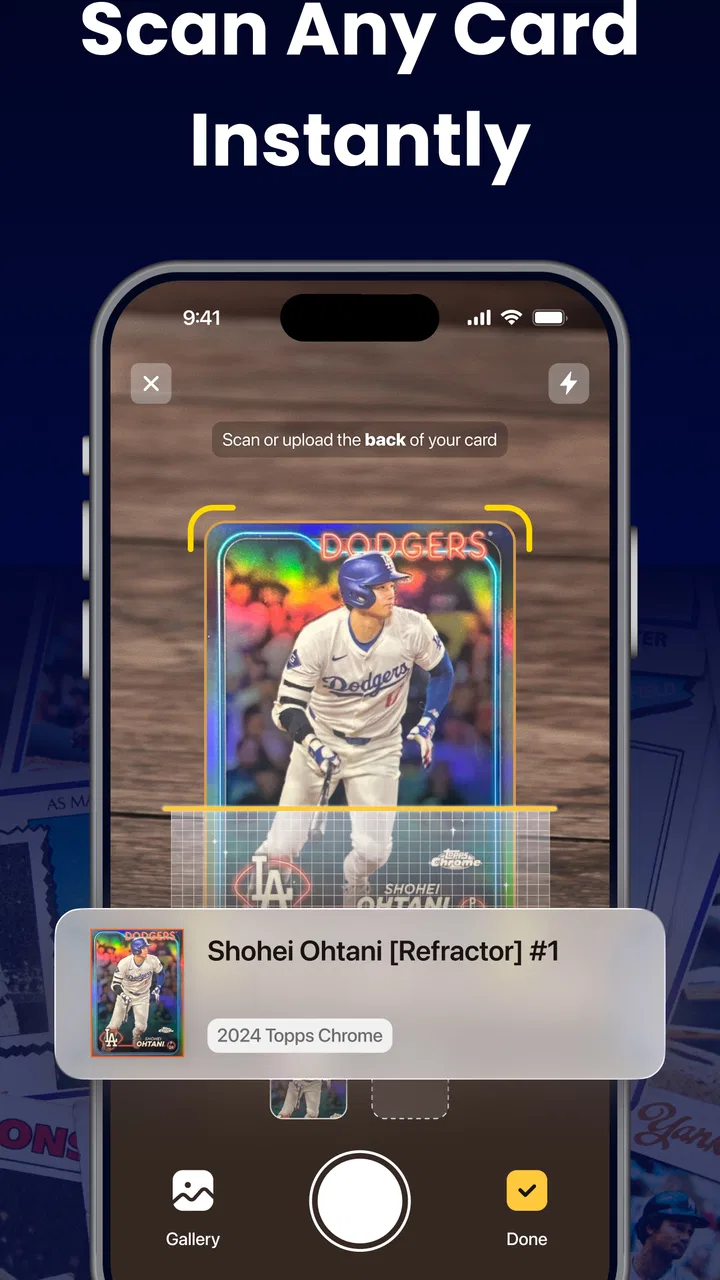
Spoly: Sports Card Scanner is designed to help collectors identify and organize sports trading cards using a smartphone camera. After scanning a card, the app can provide information such as the player, set, year, and estimated market value when data is available. It is useful for quickly reviewing a collection, checking potential values, and keeping track of cards without manually searching every detail.
02How accurate is Spoly when identifying sports cards and estimating their value?
The app can make card research much faster, but its results should be treated as an estimate rather than a guaranteed appraisal. Recognition may be affected by glare, poor lighting, damaged cards, unusual editions, foreign-language cards, or limited database coverage. Market prices also change frequently and can vary according to condition, grading, seller, and recent sales. Always verify important results independently.
03Which sports cards and trading card sets does Spoly support?
Spoly’s usefulness depends on the sports, leagues, manufacturers, and card sets included in its recognition database. Popular modern cards are generally more likely to be identified than obscure releases, vintage cards, promotional items, or custom cards. Before scanning a large collection, check the app’s current supported categories and database information, since coverage may expand or change through updates.
04Does Spoly require a subscription or in-app purchases?
The available features and pricing can depend on the version of Spoly installed and the user’s region. Some tools may be available for free, while unlimited scans, advanced collection features, price information, or other premium functions may require a subscription or in-app purchase. Review the listing and payment screen carefully before starting a trial, and check renewal terms if a subscription is offered.
05Is my collection data and camera information safe when using Spoly?
Using Spoly normally requires camera access so the app can photograph or recognize cards. Depending on its features, scanned images, collection details, account information, or usage data may also be processed through online services. Before using the app, review its privacy policy and the permissions requested on your device. Avoid uploading sensitive information, and disable permissions you do not need.
Pros
- Quickly identifies many sports cards using the phone camera.
- Useful for organizing large collections with less manual data entry.
- Helps estimate card values and spot potentially valuable finds.
- Supports collection tracking for cards from multiple sports.
- Convenient for checking cards while shopping or trading.
Cons
- Recognition may fail with rare
- damaged
- or poorly photographed cards.
- Value estimates can change quickly with market demand.
- Some features or card details may require a paid subscription.
- Camera scans work best with good lighting and a steady surface.
- Database coverage may vary by sport
- set
- and regional release.

Spoly: Sports Card Scanner
Gallery